Sep 8, 2026 · 4 min read
Learning to Love a Cast Iron Pan
Cast iron is far less fussy than its reputation suggests. Learn what seasoning really is, why a little soap is fine, what to cook first, and how to fix sticky surfaces, flaking, and rust without panicking.
Words by Marisol Ortega
Cast iron has a reputation for being fussy. People warn you never to use soap, never to cook tomatoes in it, and to guard the seasoning like a family heirloom. The truth is more relaxed. A cast iron pan is one of the most durable tools you can own, and the few rules that genuinely matter are easy to learn.
What seasoning actually is
Seasoning is not a flavor, and it is not just leftover grease. When a thin layer of oil is heated past its smoke point, it polymerizes, meaning the fat molecules link into a hard, slick coating bonded to the iron. Each layer protects the metal from rust and makes the surface more resistant to sticking. Every time you cook with fat, you add a little more.
The soap question
Old-fashioned lye soaps could strip seasoning. Modern dish soap is much gentler, and a small amount will not harm a well-seasoned pan. What does cause damage is soaking. Leaving cast iron in a sink full of water invites rust. Wash it promptly, and you can use soap whenever the pan needs it.
A cleaning routine that works
- While the pan is still warm, rinse it under hot water.
- Scrub with a brush, a chain mail scrubber, or a paste of coarse salt and a little water for stuck-on bits. A drop of soap is fine.
- Towel it dry, then set it over low heat for a couple of minutes to drive off any remaining moisture.
- While it is warm, rub in a few drops of neutral oil with a paper towel, then keep wiping until the surface looks almost dry. Too much oil leaves a sticky film.
What to cook first
A new or newly restored pan benefits from foods with plenty of fat. Good early choices include:
- Bacon or sausages
- Shallow-fried potatoes or hash browns
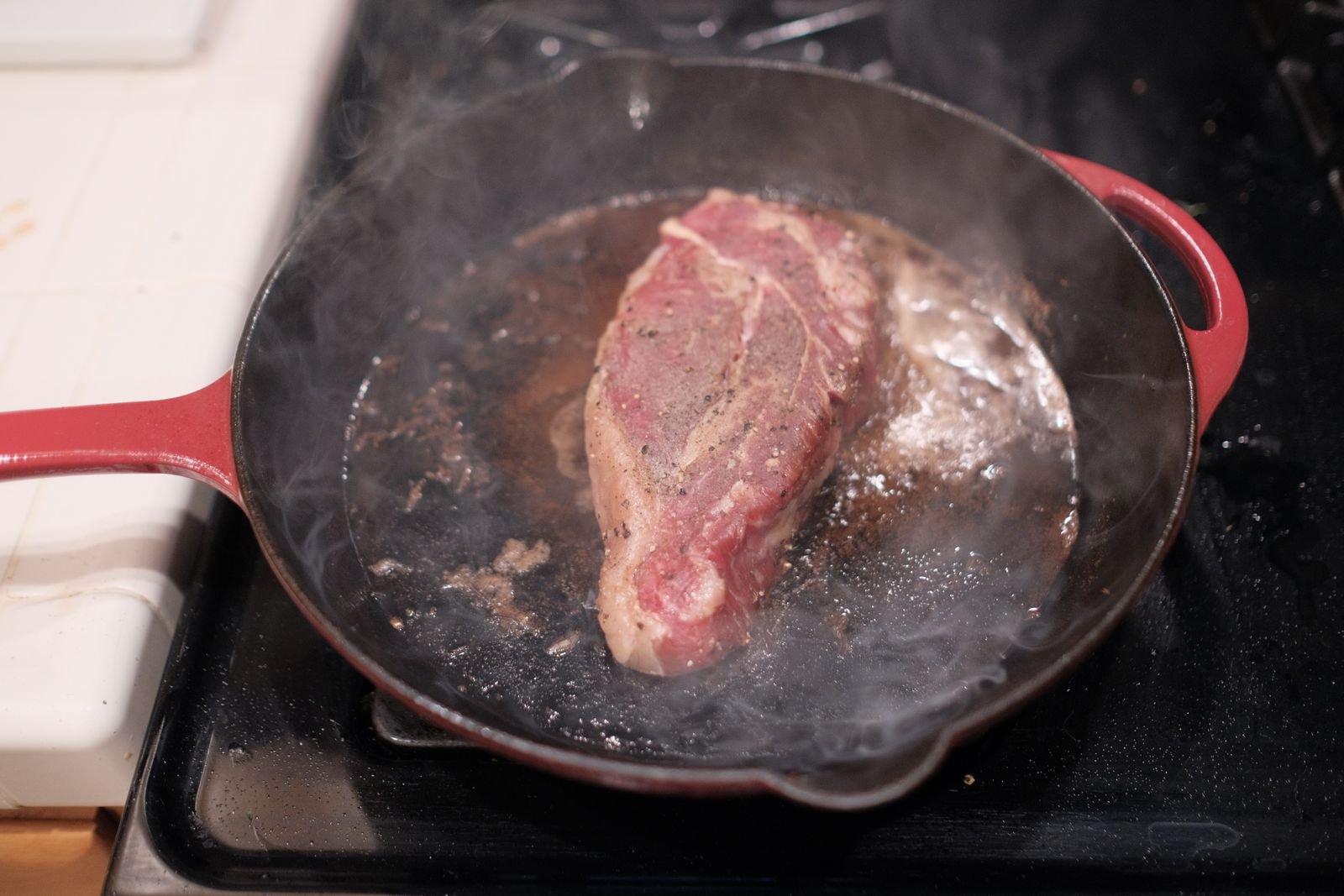
- Seared burgers and steaks
- Cornbread baked in a well-buttered, preheated skillet
- Vegetables roasted with a generous coating of oil
Each of these builds seasoning while giving you something good to eat.
What can wait
Long-simmered acidic dishes, like tomato sauce cooked for an hour or a wine braise, can wear away young seasoning and pick up a metallic taste. A quick tomato pan sauce is fine in an established pan. Delicate fish and eggs may also stick until the surface is slick, so give those a few months or use plenty of butter.
Heat it properly
Cast iron heats slowly and holds that heat for a long time. Preheat it over medium heat for about five minutes rather than cranking the burner to high, which creates hot spots directly over the flame. To check readiness, flick in a few drops of water; they should skitter and evaporate within a couple of seconds. Once hot, the pan stays hot, so you can often lower the heat a notch after food goes in.
Remember that the handle gets every bit as hot as the pan. Keep a thick towel or handle sleeve nearby and grab it every single time, even when you are sure the pan has cooled.
Troubleshooting common problems
A sticky or gummy surface
Too much oil went on and never fully polymerized. Bake the pan upside down at 450F for an hour, which usually sets the excess. If it still feels tacky, scrub it with salt and start fresh with very thin coats.
Black flakes on your food
These are usually carbonized food bits or weak seasoning lifting away. Scrub the pan well, dry it, oil it lightly, and keep cooking. The surface evens out with regular use.
Rust
Rust looks alarming but is almost always fixable. Scrub the rusty area with steel wool down to bare metal, wash, dry completely, and coat the whole pan, inside and out, with a very thin layer of oil. Bake it upside down at 450F to 500F for an hour with foil on the rack below to catch drips, then let it cool in the oven. Repeat two or three times for a sturdy base.
Storing it in a humid kitchen
In damp climates, even a dry pan can develop rust spots over time. Store it where air circulates rather than in a closed cabinet beside the dishwasher. Tucking a paper towel inside absorbs moisture and protects the surface if other pans are stacked on top.
Cook in it often, dry it well, and do not worry much about the rest.
The long view
A cast iron skillet improves with age in a way few kitchen tools do. Scratches fade, the surface slowly turns glassy, and the pan gets better the more you use it. Even if you ruin the seasoning entirely, you can strip it and start again. There is very little you can do to cast iron that time and a little oil cannot fix.