Apr 28, 2026 · 4 min read
How to Stock a Pantry You Will Actually Use
A useful pantry is less about stocking up and more about stocking on purpose. Audit what you own, build in three layers, buy smaller than feels natural, and cook from the shelves every week so nothing quietly expires.
Words by Hannah Kowalczyk
Most pantries are not short on food. They are short on food that gets eaten. Somewhere behind the rice there is a jar of something you bought for one recipe two years ago, next to a bag of lentils you forgot you had, next to a second bag of the same lentils. A useful pantry is less about stocking up and more about stocking deliberately.
Start with an honest audit
Pull everything out. Yes, everything. Group like with like on the counter so you can see how many open bags of pasta you own. Check dates and smell anything questionable: nuts and whole grain flours turn rancid and smell like old paint or crayons, and ground spices that have lost their scent will not add much flavor. Toss what is past its prime without guilt, and pass along anything still good that you know you will never use.
What is left tells a story about how you actually cook. If you have four kinds of vinegar and no canned tomatoes, that is useful information.
Think in three layers
Layer one: the foundation
These are the ingredients that turn into a meal with little else. Keep them in quantities you will go through in a month or two.
- A long-grain rice and one other grain you like, such as farro or quinoa
- Two pasta shapes, one long and one short
- Canned whole tomatoes and tomato paste
- Canned beans, plus dried lentils, which cook without soaking
- Stock or bouillon
- A neutral oil and a good olive oil
- All-purpose flour, sugar, baking soda, and baking powder
- Onions and garlic, kept in a cool, dark, ventilated spot
Layer two: the flavor movers
This is where a pantry earns its keep. A small set of bold ingredients can make the same pot of beans taste like three different dinners.
- At least two acids, such as red wine vinegar and rice vinegar
- Soy sauce or another salty, savory seasoning
- Something spicy: chili flakes, chili crisp, or a hot sauce you love
- Something deeply savory: anchovies, miso, or capers
- A jar of mustard and a jar of tahini or peanut butter
- Honey or maple syrup
- A dozen spices you reach for regularly, bought in small amounts
Layer three: the rotating shelf
Leave one small shelf for experiments: the harissa from a recipe you are trying, a new dried chile, a specialty flour. The rule is simple. When something on this shelf gets used up and you miss it, it gets promoted. When it sits untouched for six months, it goes.
Buy smaller than you think
Bulk bins and warehouse sizes look like a deal, but ground spices lose much of their punch within a year, whole wheat flour can go rancid within a few months at room temperature, and nuts turn faster still. Unless you go through something quickly, buy the smaller package and accept the slightly higher price per ounce. Throwing away half of a giant bag is not a bargain.
Store for visibility and freshness
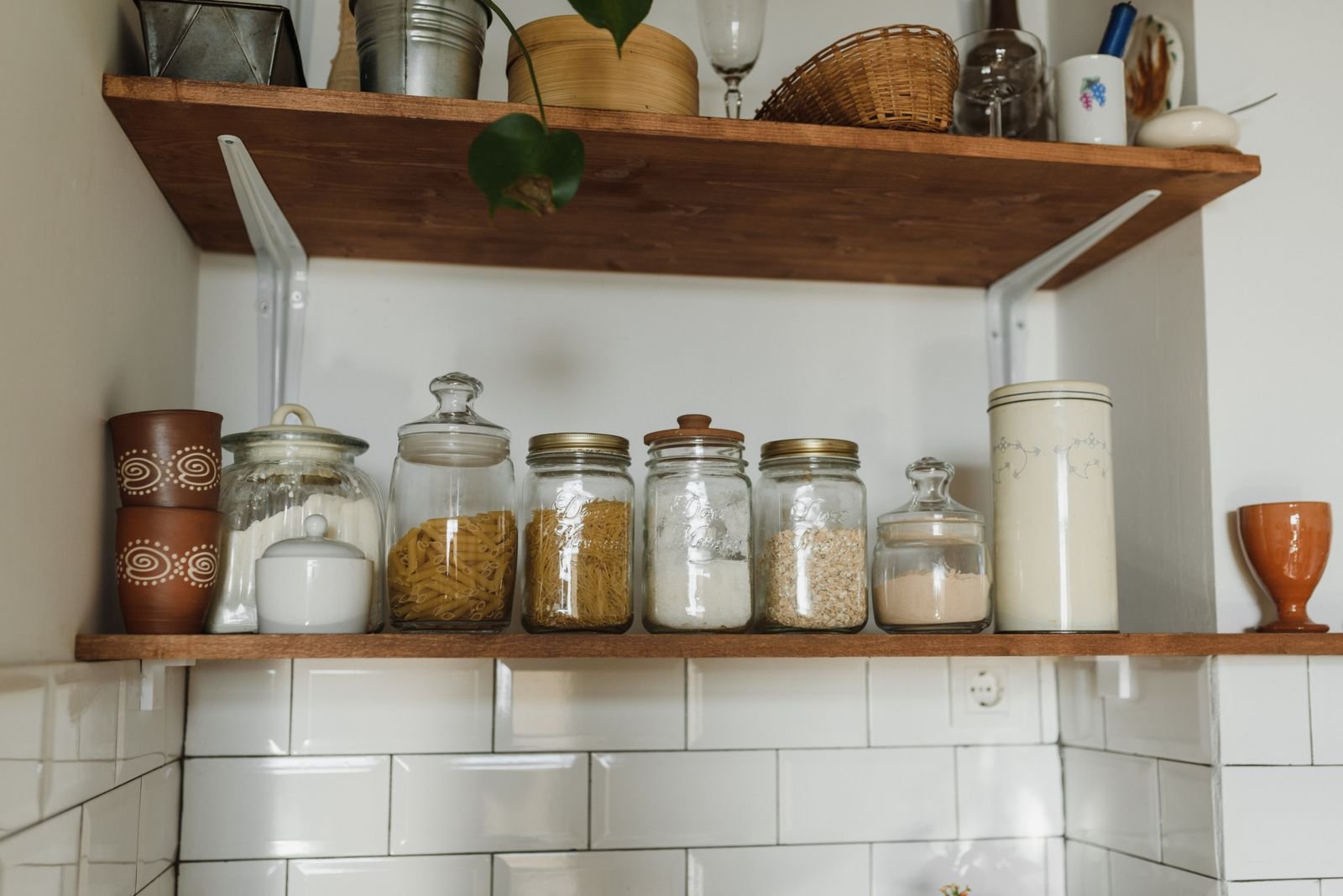
- Decant into clear jars. Airtight glass keeps bugs out, keeps brown sugar soft, and shows you at a glance when you are running low.
- Label and date. A strip of masking tape with the contents and the month you opened it saves a lot of sniffing.
- First in, first out. When you bring home a new can of tomatoes, it goes behind the one already on the shelf.
- Use the freezer as pantry space. Nuts, seeds, whole grain flours, and cornmeal keep far longer frozen. Let the container come to room temperature before opening so condensation does not form inside.
- Respect the humidity. In warm, damp climates, crackers go stale and spices clump quickly. Keep the pantry away from the stove and dishwasher, where heat and steam collect.
Keep a running list where you cook
A notepad taped inside the pantry door catches things the moment you use the last of them. It is far easier than trying to remember, halfway to the store, whether you still have cumin.
Cook from it on purpose
Once a week, make a meal mostly from the pantry. A few reliable formulas help:
- Pasta, olive oil, garlic, chili flakes, and whatever greens are wilting in the fridge.
- Rice, a fried egg, a drizzle of soy sauce, and something crunchy or pickled.
- Canned beans simmered with tomato paste, spices, and stock, finished with a splash of vinegar.
- Lentils cooked with onions and a spoonful of curry paste, served over rice.
Pantry meals keep things moving, and they reveal which ingredients earn their shelf space and which are just along for the ride.
A good pantry does not look like a store. It looks like your cooking, with a little room left over for curiosity.