Apr 7, 2026 · 4 min read
The Case for Weighing Your Flour
A cup of flour can weigh 120 grams or 150 depending on who scoops it. Here is why a simple kitchen scale makes baking steadier, plus working gram weights for everyday ingredients and when measuring spoons still win.
Words by Marisol Ortega
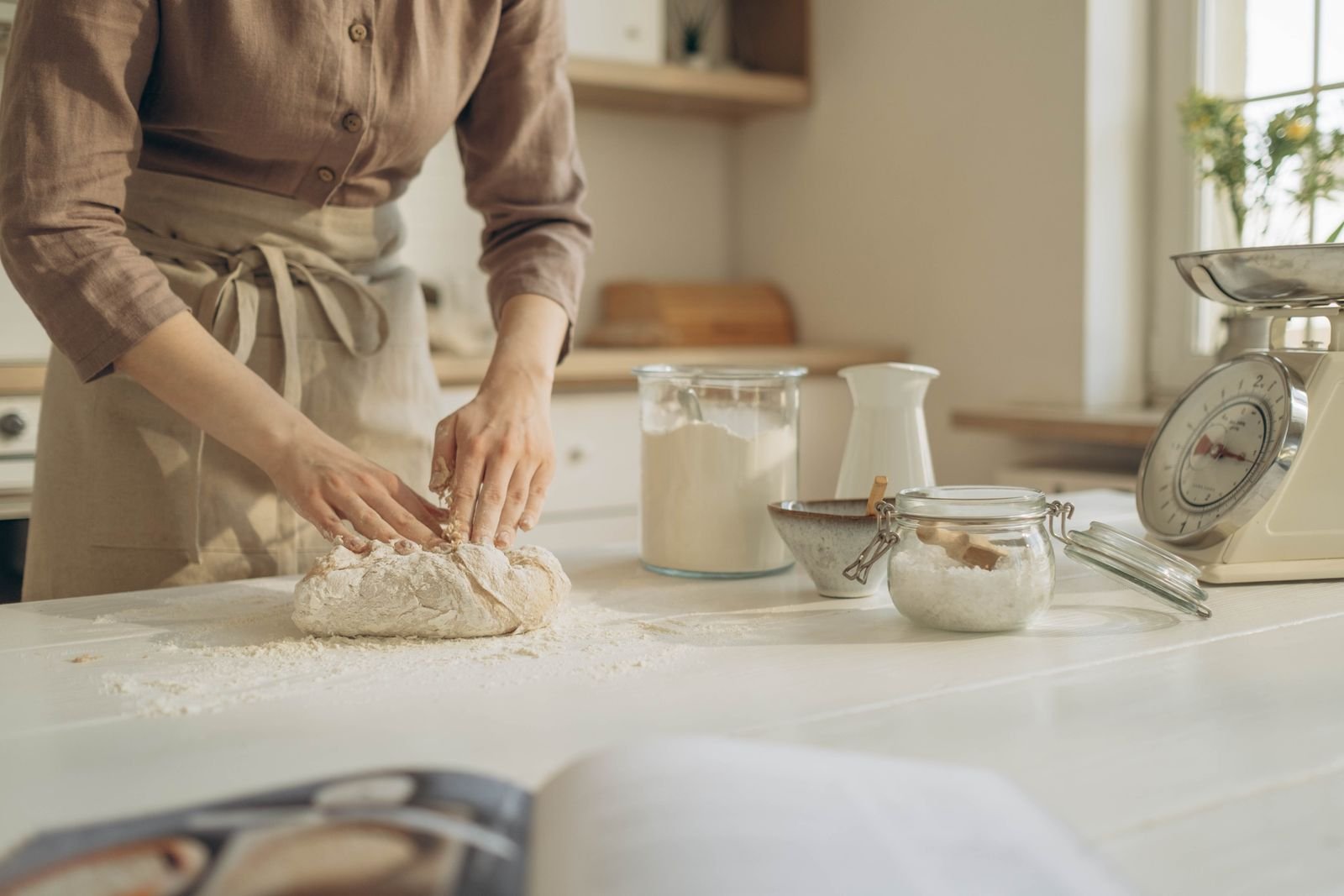
Ask ten people to measure a cup of flour and you will get ten different amounts. Some dip the cup into the bag and pack it tight. Some spoon flour in gently and sweep the top flat. Some give it a shake to settle it, then add a little more. None of them are wrong, exactly, but the results can differ by 25 or 30 grams, which is the gap between a tender biscuit and a dense puck.
A kitchen scale closes that gap. It is the cheapest change that makes baking more predictable, and once you try it, going back to cups feels like guessing.
Why volume is so slippery
Flour is compressible. It settles in the bag during shipping, fluffs up when you whisk it, and packs down when you scoop. A cup is a measure of space, not of stuff, so how much flour fills that space depends on how much air came along for the ride. Scooped flour can weigh 150 grams per cup. Spooned and leveled, the same flour lands closer to 120 or 125.
Recipes rarely tell you which method the writer used. If a recipe calls for three cups and you scoop while the author spooned, you just added nearly an extra half cup of flour. Your cookies spread less, your cake domes and cracks, and your bread dough feels stiff. You blame the recipe, or yourself, when the real culprit is the cup.
What changes when you weigh
- Repeatability. A loaf that worked last week will work again, because 500 grams is always 500 grams.
- Fewer dishes. Set a bowl on the scale, press tare, add flour. Press tare again, add sugar. No stack of sticky measuring cups in the sink.
- Easy scaling. Halving a recipe that calls for 3/4 cup plus 2 tablespoons is annoying. Halving 110 grams is not.
- Cleaner troubleshooting. If a bake goes wrong, you can rule out measurement and look at oven temperature, timing, or technique instead.
How to switch without rewriting your recipe box
You do not need to convert everything at once. Start with the recipes you make most often. The next time you bake one, measure the way you normally do, but weigh each ingredient before it goes into the bowl and write the grams in the margin. That captures your version of the recipe, the one you already like, in numbers that will not drift.
For new recipes that only list cups, these working weights are a good starting point:
- All-purpose flour, spooned and leveled: 125 grams per cup
- Bread flour: 130 grams per cup
- Whole wheat flour: 120 grams per cup
- Granulated sugar: 200 grams per cup
- Packed brown sugar: 215 grams per cup
- Powdered sugar: 115 grams per cup
- Butter: 227 grams per cup, or 113 grams per stick
- Water or milk: about 240 grams per cup
- Honey or maple syrup: about 330 grams per cup
Treat these as close approximations rather than laws. Flours absorb water differently, even within the same type, so pay attention to how the dough looks and feels the first time through.
Weigh the sticky things, too
Honey, molasses, peanut butter, and tahini are miserable to measure by volume, because half of it stays behind in the cup. Weighing them directly into the bowl means every bit you pour counts. If you overshoot, a spoon can lift a little back out before you start mixing.
When a scale is not the right tool
Most home scales read in one-gram steps, which is not precise enough for tiny amounts. A teaspoon of instant yeast weighs about 3 grams and a teaspoon of fine salt about 6, so a one-gram error is a big percentage. For anything under 10 grams, measuring spoons are perfectly reasonable. If you bake bread often, a small pocket scale that reads to a tenth of a gram is a nice addition.
Cooking, as opposed to baking, is also more forgiving. Nobody needs to weigh the onion for a pot of soup. Save the scale for recipes where ratios matter: bread, pastry, cakes, custards, and anything you want to make exactly the same way twice.
A quick primer on baker's percentages
Once you weigh, you can start reading bread recipes the way bakers do. Flour is always 100 percent, and every other ingredient is expressed relative to it. A dough with 1000 grams of flour, 700 grams of water, and 20 grams of salt is 70 percent hydration with 2 percent salt. That shorthand makes it easy to compare recipes, spot a very wet dough before you commit to it, and scale a formula up or down without fractions.
Measure in a way that does not depend on anyone's scooping habits, including your own.
Picking and caring for a scale
Look for a flat platform large enough to hold your biggest mixing bowl without hiding the display, a tare button that responds quickly, and a capacity of at least 5 kilograms. Keep the scale on a flat, hard surface when weighing, wipe it with a damp cloth rather than rinsing it, and replace the batteries when readings start to wander.
Give it two weeks. After a handful of bakes, reaching for the scale will feel as automatic as preheating the oven, and your results will be steadier for it.